The short answer
Compared with regular soda, yes, for most people. Prebiotic soda usually has much less sugar and some added fiber. It is not a health food or a gut fix, and the gut claims are not well proven. Think of it as a better soda, not a supplement.
Prebiotic soda went from niche to everywhere in a few years. The cans are bright, the claims are big, and the price is higher than regular soda. So is it actually good for you? The honest answer is: it is a good swap, and that is about it.
What prebiotic soda is
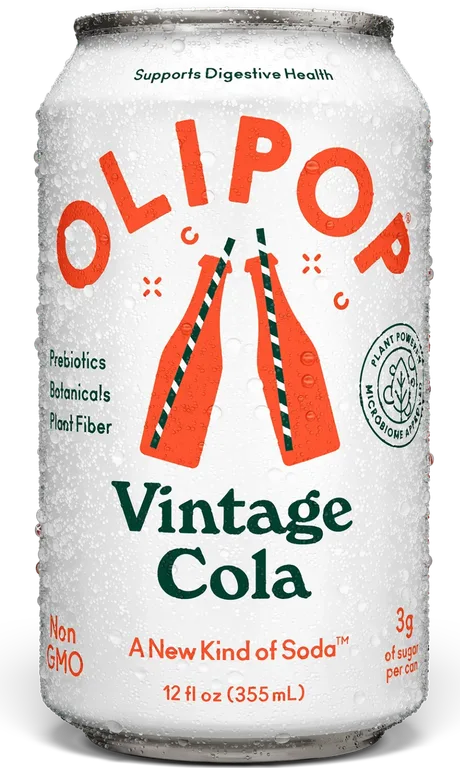
Prebiotic soda is a sparkling soft drink with added fiber. Prebiotics are fibers that your body does not digest. They reach your gut, where the bacteria that live there can feed on them. Common sources on the label include inulin, chicory root, and other plant fibers.
Most prebiotic sodas also cut the sugar way down and use sweeteners like stevia or monk fruit, plus some fruit juice or cane sugar. If you want the full breakdown of prebiotics vs. live cultures, see prebiotic vs. probiotic soda.
The good parts
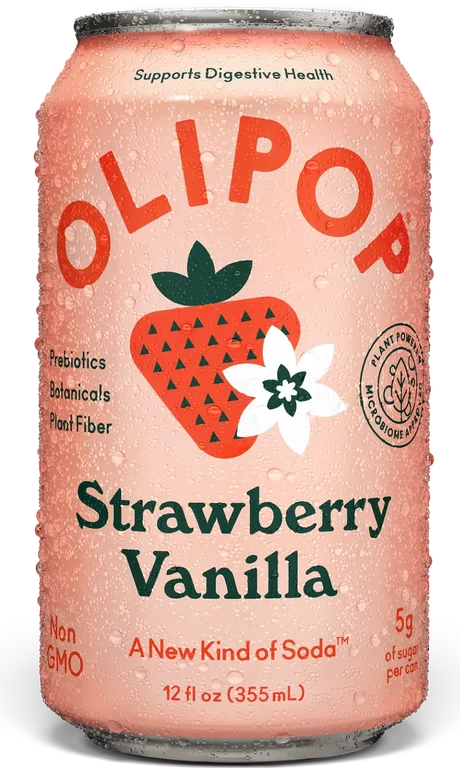
- Much less sugar. This is the big, measurable win. A 12 oz Coca-Cola has 39g of sugar. OLIPOP Strawberry Vanilla has 5g.
- Some fiber. That same OLIPOP has 9g of fiber per can. The FDA Daily Value for fiber is 28g, and most people do not reach it.
- Fewer calories. OLIPOP Strawberry Vanilla has 45 calories, compared with 140 in a can of Coke.
- It still feels like soda. That makes it easier to stick with than water alone.
The less exciting parts
- Gut-health claims are not proven for soda. Fiber in general is good for you. Whether a can of prebiotic soda changes your gut in a meaningful way is not well studied.
- It can make you gassy. A lot of fiber at once, especially if you are not used to it, can cause bloating.
- It is still a soda. It is a treat, not a vegetable. Food is a better source of fiber.
- Labels vary a lot. Some brands have plenty of fiber. Others mostly have vinegar or a small amount of fiber. Read the label.
If you have IBS or another gut condition, some prebiotic fibers like inulin can bother you. Ask your doctor before you make these a daily habit.
How to pick a good one
Here is a simple checklist for the can.
| Check | Good sign | Watch out for |
|---|---|---|
| Sugar | Under 5g or so | Double digits |
| Fiber | Listed, and a real amount | 0g or 1g, with "prebiotic" on the front |
| Sweetener | One you like the taste of | One that gives you an aftertaste or upset stomach |
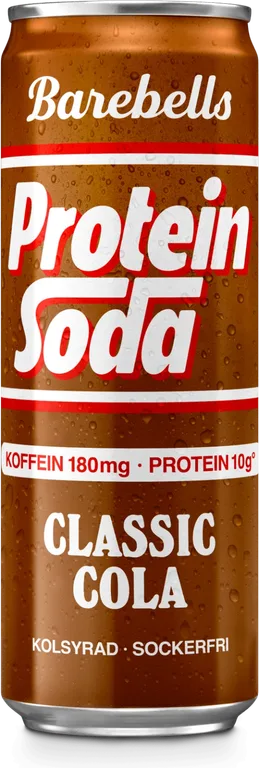
| Caffeine | Matches when you drink it | A caffeinated cola at 9 p.m. |
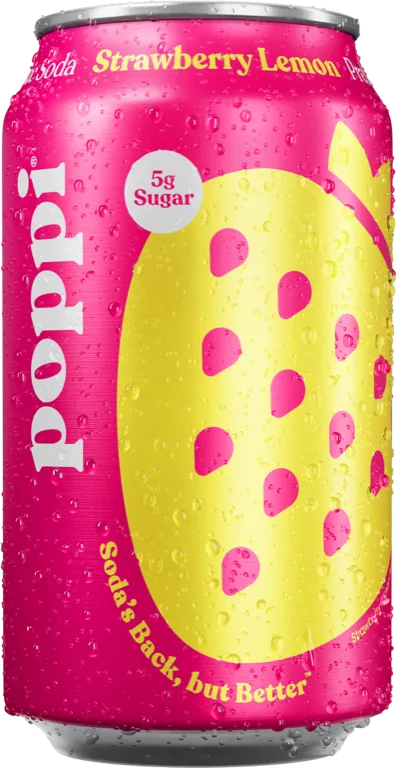
Poppi is a good example of why you should check. It is a prebiotic soda made with apple cider vinegar, so look at the back to see what it gives you. Different brands take different paths.
How to fit it into your day
- Use it as a swap. It works best when it replaces a regular soda, not when it is added on top of one.
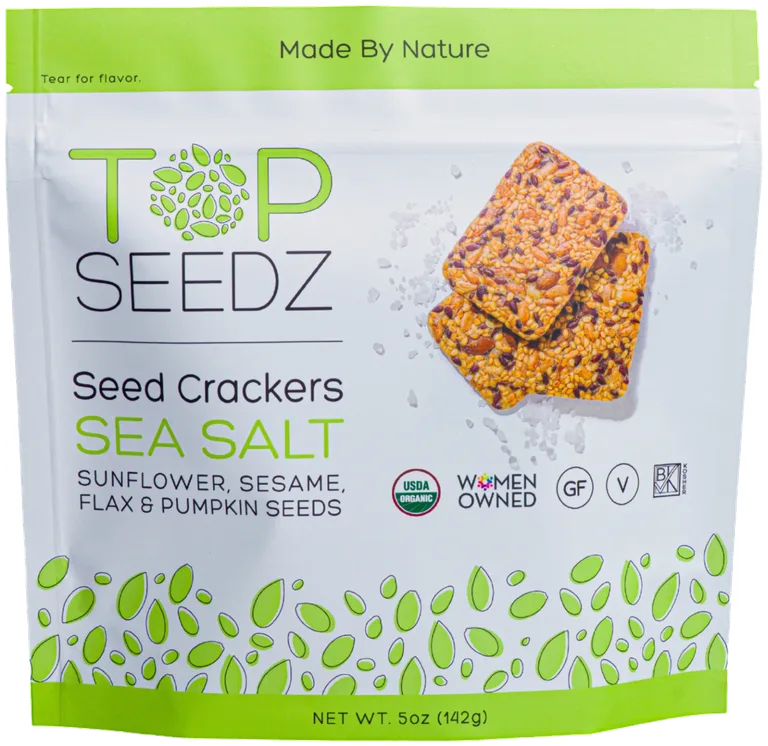
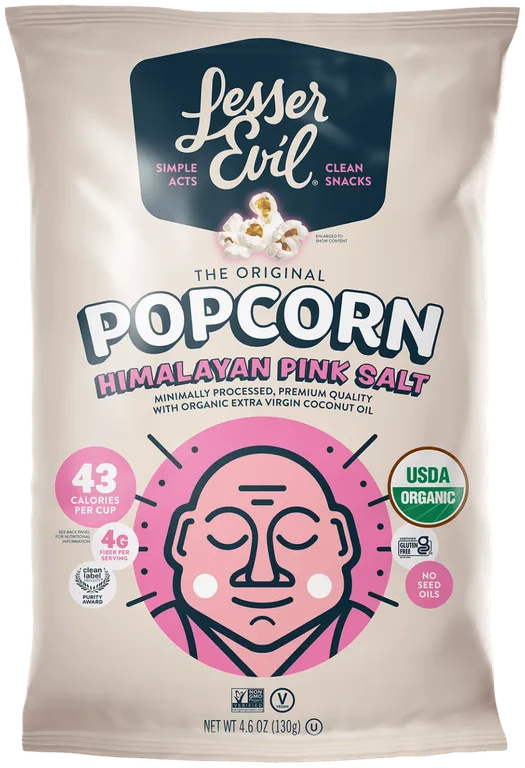
- Have it with food. A can with a salty snack, like LesserEvil's organic popcorn, feels like a real treat and is easier on your stomach.
- Start with one a day or less. See how your body feels before you drink more.
Looking for other ways to replace soda? Read healthy soda alternatives.
Try a few before you buy a case
There are dozens of prebiotic sodas now, and they do not all taste the same. Most sell online by the case, so finding your favorite can turn into a fridge full of cans you do not love.
finds box is 10 snacks and drinks our team picked and tasted. Each box has up to 2 drinks, and the rest are snacks. Everything is high in protein, high in fiber, or low in sugar, with the macros listed. Want to pick your own can? Build your own box instead.
Common questions
For most people, one a day in place of regular soda is a reasonable swap. If it makes you bloated, cut back. Ask your doctor if you have a gut condition.
Both have far less sugar than regular soda. Prebiotic soda often adds fiber, while diet soda usually has none. Pick the one you enjoy and feel good drinking.
It can help if it replaces a sugary soda, since it has fewer calories and less sugar. On its own, it does not cause weight loss.